Everest Base Camp Cho La Pass Gokyo Trek stands in a class of its own for those seeking the most complete and spectacular high-altitude adventure in the Khumbu. This epic 15-day journey masterfully combines the classic Everest pilgrimage with the pristine beauty of the Gokyo Valley, connected by the thrilling challenge of the glaciated Cho La Pass. It’s a demanding, technically advanced route designed for those with stamina and a spirit of adventure. This trek offers unparalleled rewards in breathtaking landscapes, profound cultural immersion, and a deep sense of personal achievement.
Your trek begins with the iconic flight to Lukla, followed by the ascent through vibrant Sherpa villages like Phakding and Namche Bazaar. Those villages are the bustling heart of the Khumbu. Acclimatization here is key, and time is well spent on short hikes to viewpoints like Syangboche for awe-inspiring vistas of Everest, Lhotse, and Ama Dablam. You can also visit the historic Khumjung Village and Hillary School. The trail then winds through rhododendron forests, past waterfalls and ancient chortens, leading you to the spiritual Tengboche Monastery before climbing to Dingboche and ultimately Gorak Shep.
The classic Everest highlights are yours to conquer: standing at the foot of the world’s highest peak at Everest Base Camp (5,364m) and witnessing a majestic Himalayan sunrise from the summit of Kala Patthar (5,545m), with Everest, Nuptse, and Lhotse painted in golden light.
The adventure then diverges onto a more rugged path. You will journey to Dzongla in preparation for the trek’s technical crown: the traverse of Cho La Pass (5,420m). This demanding day begins before dawn, navigating steep, often icy slopes. It is a true test of resilience that culminates in a thrilling, once-in-a-lifetime achievement at the pass before descending past the immense Ngozumpa Glacier.
Entering the Gokyo Valley, you are greeted by the stunning sight of the emerald Gokyo Lakes, their turquoise waters reflecting the surrounding snow-capped giants. The climb to the summit of Gokyo Ri (5,357m) offers one of the Himalaya’s most magnificent panoramas, a western-front view of Everest alongside Cho Oyu, Lhotse, and Makalu.
The return journey offers fresh perspectives, following quieter trails through villages like Dole and Phortse before concluding back in Lukla. This trek is a true epic, weaving together high-altitude challenges, serene alpine valleys, glacial passes, and deep cultural encounters. While the days can be long and strenuous, the reward is a unique album of glorious photographs. You will pass through the incredible mountain vistas and the immense satisfaction of a journey accomplished. This creates the perfect, comprehensive Himalayan experience for those who wish to explore far beyond the ordinary.
Outline Itinerary for Gokyo Chola Pass Trek via Everest Base Camp
Day | Destination / Activity | Altitude | Walking Time |
1 | Arrival in Kathmandu | 1,345 m | - |
2 | Drive: Kathmandu to Ramechhap (Manthali) | 470 m | 4-5 hours |
3 | Flight to Lukla & Trek to Phakding | 2,880 m → 2,640 m | 3-4 hours |
4 | Trek: Phakding to Namche Bazaar | 3,445 m | 5-6 hours |
5 | Acclimatization Day in Namche Bazaar | 3,445 m | 4-5 hours (hike) |
6 | Trek: Namche Bazaar to Dole | 4,200 m | ~5 hours |
7 | Trek: Dole to Machhermo | 4,400 m | ~5 hours |
8 | Acclimatization Day in Machhermo | 4,400 m | 2-3 hours (optional) |
9 | Trek: Machhermo to Gokyo | 4,700 m | ~4 hours |
10 | Hike Gokyo Ri & Trek to Thangnak | 5,360 m → 4,700 m | 6-7 hours |
11 | Trek: Thangnak to Dzongla via Cho La Pass | 5,357 m → 4,300 m | 7-8 hours |
12 | Trek: Dzongla to Lobuche | 4,940 m | 2-3 hours |
13 | Trek: Lobuche to Everest Base Camp | 5,364 m (EBC) | 7-8 hours |
14 | Hike Kala Patthar & Trek to Pheriche | 5,545 m → 4,240 m | 7-8 hours |
15 | Trek: Pheriche to Namche Bazaar | 3,445 m | 7-8 hours |
16 | Trek: Namche Bazaar to Lukla | 2,880 m | 6-7 hours |
17 | Flight to Ramechhap & Drive to Kathmandu | 1,345 m | - |
18 | Free / Contingency Day in Kathmandu | 1,345 m | - |
19 | Final Departure | - | - |
Why is the Gokyo Chola Pass Trek with the Everest Base Camp?
For those dreaming of the Everest region, a common dilemma arises: should I trek to the classic Everest Base Camp or explore the stunning Gokyo Lakes? The beauty of the Gokyo Cho La Pass Trek is that it boldly answers, "Both." This isn't just a trek; it's a comprehensive Himalayan symphony, masterfully combining the world's most famous mountaineering objective with one of its most beautiful alpine sanctuaries. It’s designed for the adventurer who refuses to choose between iconic history and pristine beauty, offering a more complete, challenging, and rewarding narrative of the Khumbu. By linking these two legendary destinations via the high-altitude adventure of the Cho La Pass, you don't just visit the Himalayas; you traverse and truly experience their full, breathtaking scope.
Everest Base Camp
The pull of Everest Base Camp is more than just geographical; it’s profoundly emotional. This trek fulfills the deep-seated desire to stand in the very footsteps of legends, on the ground where climbing history has been written for decades. The journey there is a pilgrimage through the story of Everest itself. You will walk trails worn by Sherpa guides and hopeful summiteers. Pass through villages that exist to support these lofty ambitions, and feel the anticipation build with every step. Reaching the chaotic, colorful sprawl of Base Camp itself (5,364m) is a moment of powerful contrast. Against the serene, silent power of the Khumbu Icefall and the towering southwest face of Everest, the site hums with a temporary, tent-bound human energy. It is not a viewpoint for pretty pictures (that comes later from Kala Patthar), but rather a place of raw context. Here, you gain a tangible, humbling sense of scale and the sheer human endeavor required to climb the planet’s highest peak. It transforms Everest from a distant image on a screen into a tangible, awe-inspiring reality.
Gokyo Lake: The Himalayan Mirror of Serenity
Gokyo Valley feels like entering a secret, sacred world. The journey here is quieter, the trails less traveled, building a sense of discovery. Then, you encounter the lakes. The six turquoise and emerald jewels of Gokyo are not only beautiful but also mesmerizingly serene. Fed by the glacial melt of the Ngozumpa Glacier, their colors shift with the light and sky. It will perfectly mirror the giants that guard them: Cho Oyu, Gyachung Kang, and Everest itself.
Unlike the rocky, glacial environment of EBC, Gokyo is a landscape of reflection, both literal and metaphorical. The silence is profound, broken only by the wind or the distant rumble of an avalanche. Sitting by the shores of the third or fourth lake, you experience a different kind of Himalayan magic, one of peace, immense natural beauty, and a powerful, calming solitude that feels worlds away from the well-trodden path to Everest.
Hike to Gokyo Ri
While Kala Patthar offers the classic, close-up portrait of Everest, the ascent of Gokyo Ri (5,357m) presents the grand, wide-angle masterpiece. The climb is a steep, breathless two-hour grind from Gokyo village, but every step is an investment in what is widely considered one of the finest panoramic views on Earth. From the summit, the Himalayan world unfolds in a 360-degree spectacle. To the north, a sea of icy peaks is dominated by the vast, sprawling hulk of Cho Oyu. Turning east, your gaze travels across the mammoth Ngozumpa Glacier. It is the longest in Nepal, before landing on the unmistakable pyramid of Everest, flanked by Lhotse and Makalu. From this unique western vantage point, you see Everest not as a solitary giant but as the majestic pinnacle of an entire kingdom of mountains. The vantage point allows you to visually trace your entire journey: from the Gokyo Lakes below to the distant pass you will cross. It is a view that doesn’t just impress; it contextualizes and etches the grandeur of the entire region permanently in your memory.
Crossing Cho La Pass (5,420 m)
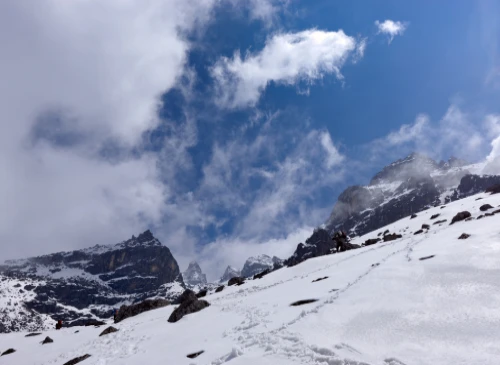
The Cho La Pass is more than a trail connection; it is the transformative adventure that binds the entire trek together. This day is the trek's defining physical and mental challenge. It begins in the pre-dawn darkness with headlamps illuminating a steep, rugged path of loose rock. As you ascend, the terrain turns to ice and snow, requiring careful, focused steps, often using basic climbing techniques.
Reaching the prayer-flag-adorned summit at 5,420 meters is a moment of pure, exhilarating triumph. You are standing on a high glaciated pass, surrounded by a stark, magnificent world of rock and ice, feeling a profound sense of remoteness and accomplishment. The descent on the other side is equally demanding, a long scramble down a rocky moraine into the Dzongla valley.
Crossing the Cho La is not a leisurely walk; it's an endeavor. It demands respect, preparation, and resilience. But the reward is immense: the undeniable personal satisfaction of overcoming a significant high-altitude challenge. It is the thrill of true adventure and the right to journey from one iconic valley to another under your own power. It transforms the trek from a sightseeing tour into a genuine expedition.
What permits do you need for the Gokyo Chola Pass Trek via the Everest Base Camp?
The Gokyo Cho La Pass and Everest Base Camp trek is an adventure of a lifetime, but before you set foot on those legendary trails, there’s some essential paperwork to take care of. Unlike spontaneous day hikes, entering the Everest region requires specific permits issued by the Government of Nepal. These aren’t just bureaucratic formalities; they are crucial for your safety, for the conservation of the fragile Himalayan environment, and for supporting the local communities.
- Sagarmatha National Park Entry Permit (SNP)
This is your ticket into the iconic Himalayan wilderness. Sagarmatha National Park is a UNESCO World Heritage Site, encompassing the entire Everest region. The permit fee directly contributes to the preservation of this unique ecosystem, protecting its diverse flora. It includes rhododendron forests and fauna such as the elusive snow leopard and the Himalayan tahr, as well as maintaining the trails and managing waste. You will obtain this permit at the National Park checkpoint in Monjo, just before entering Namche Bazaar. Your trekking guide will present the necessary documents on your behalf. Carrying a copy of your passport and a few passport-sized photos is essential for this process. - Khumbu Pasang Lhamu Rural Municipality Entrance Permit
This locally issued permit is a more recent requirement, introduced to ensure that tourism revenue benefits the villages you trek through directly. It replaces the former TIMS (Trekkers' Information Management System) card for the Khumbu region. This permit supports community projects, trail maintenance, and local services in villages like Namche, Dingboche, and Gokyo. It is typically obtained in Lukla upon your arrival or sometimes in Kathmandu at the Nepal Tourism Board office before you fly. Your trekking agency will coordinate this, making the process quick and hassle-free for you.
The mountains seen during the Gokyo Chola Pass with the EBC Trek
The Everest region is a spectacular amphitheater of the world's highest peaks. During your Gokyo Cho La Pass and Everest Base Camp trek, you will be surrounded by an ever-changing panorama of legendary summits. Here is a comprehensive list of the major mountains you will see, along with their altitudes.
Major 8,000 m Peaks:
- Sagarmatha – 8,848.86 m
- Lhotse – 8,516 m
- Makalu – 8,463 m
- Cho Oyu – 8,201 m
7,000 m & 6,000 m Peaks:
- Nuptse – 7,861 m
- Pumori – 7,161 m
- Baruntse – 7,129 m
- Ama Dablam – 6,812 m
- Kangtega – 6,685 m
- Thamserku – 6,623 m
- Kusum Kanguru – 6,367 m
- Imja Tse (Island Peak) – 6,189 m
- Lobuche West – 6,145 m
- Lobuche East – 6,119 m
- Taboche – 6,495 m
- Cholatse – 6,440 m







.webp)