Flora and fauna
The trek itself is a spectacular transect through a vertical garden, where the flora and fauna change dramatically with every thousand meters of elevation gained, offering a living textbook of Himalayan ecology. This region's remarkable isolation and stringent protection have allowed its ecosystems to remain relatively intact, providing sanctuary to an extraordinary number of species. The national park have many species that are rare, endemic, and globally endangered.
The botanical journey begins in the subtropical lower valleys (below 2,000 meters), where the air is humid and fragrant with the scent of Sal forests, intertwined with Chir Pine, oak, and towering Alnus trees. Lush stands of bamboo create dense understories, crucial for species like the Red Panda. As the trail ascends into the temperate zone (2,000-3,000 meters), the forest transforms into a mystical, moss-draped realm of Himalayan Hemlock, Silver Fir, and majestic Rhododendrons.
During spring, these forests erupt in a blaze of color as dozens of rhododendron species bloom in shades of crimson, pink, and white. Higher still, the subalpine zone (3,000-4,000 meters) introduces stunted birch and juniper, giving way to the alpine meadows above 4,000 meters. Here, in the brief summer, the "kharka" (grazing pastures) becomes a breathtaking carpet of wildflowers: delicate primulas, vibrant poppies, blue gentians, and the iconic edelweiss. Those all adapted to survive intense ultraviolet radiation and freezing temperatures.
This diverse flora supports an equally impressive and often elusive array of fauna. The region is a celebrated mammalian haven. It is one of the last strongholds for the endangered Snow Leopard, whose presence is more often tracked by prints and scrapes than by sight. The dense forests are home to the cryptic Red Panda and the Himalayan Musk Deer, prized for their scent glands. Herds of Himalayan Tahr and Blue Sheep navigate the precipitous cliffs. The skies and forests are a paradise for ornithologists, hosting over 250 bird species. The undergrowth may reveal the iridescent plumage of the Himalayan Monal or the Satyr Tragopan, while the cry of the Lammergeier (Bearded Vulture) echoes across valleys. Smaller, yet vital, components of the ecosystem abound, including diverse amphibians like the Himalayan Salamander and a multitude of butterflies and insects. This rich tapestry of life, from the towering ancient trees, creates a complex, making every step on the Kanchenjunga Circuit a walk through one of the planet's most magnificent living landscapes.
Geography and Terrain in the Kanchenjunga Circuit Trek
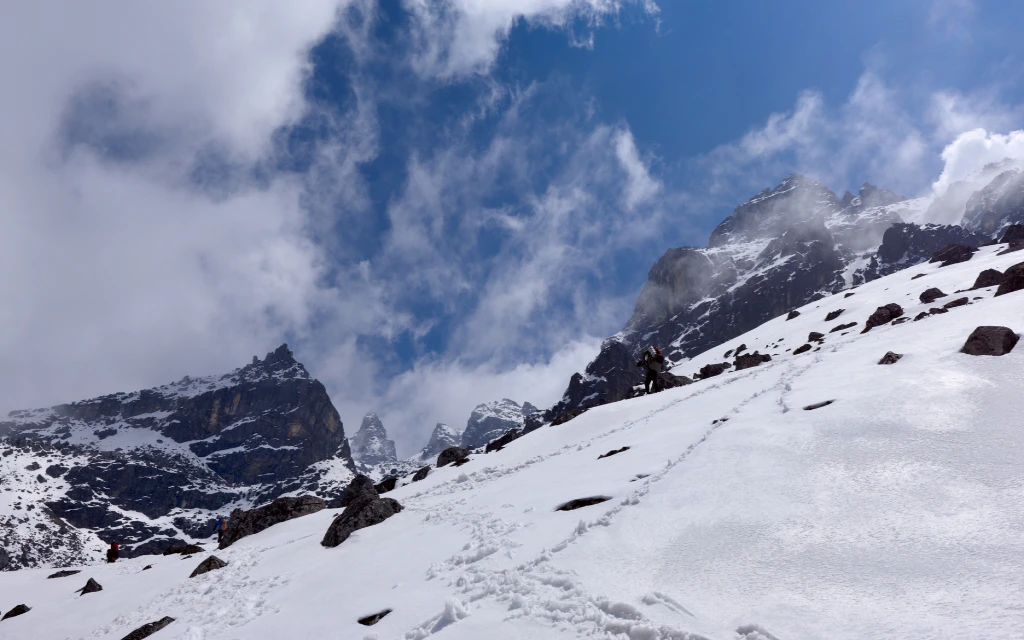
The geography of the Kanchenjunga Circuit is a dramatic, awe-inspiring study in vertical scale and glacial power, presenting you with a constantly evolving and physically demanding natural tableau. The terrain itself is the primary architect of the journey's challenge and its profound beauty. The trek unfolds within the colossal catchment of the Kanchenjunga massif, whose five major summits and sprawling glacial systems dominate the landscape. This is not a single valley walk but a full circumnavigation, requiring you to traverse the deep, U-shaped glacial valleys carved by ancient rivers of ice that flank the mountain on both its northern and southern sides. These valleys, such as the Ghunsa Valley in the north and the Yalung Valley in the south, are textbook examples of glacial troughs. You will see a wide, steep-walled, and punctuated by massive lateral moraines, the rocky debris left by retreating glaciers that you will often walk upon as natural highways.
The trail conditions are exceptionally varied and rugged, a direct reflection of the complex topography. You will transition from muddy, root-tangled paths in dense, humid subtropical forests to steep, stone-step staircases ascending sheer valley walls. The high alpine sections feature narrow, winding trails across loose scree slopes and exposed ridges where footing requires constant attention. The circuit's defining geographical challenges are the high mountain passes, most notably the Sele La and Mirgin La. Crossing these passes involves long, arduous ascents to rocky, wind-swept saddles where the air is thin, often followed by steep, knee-jarring descents on the other side. These passes are not just physical hurdles but vital geographical gateways, acting as the watershed divides between the northern and southern river systems and offering unparalleled panoramic vistas that reward the effort.
The entire landscape is an active monument to glaciation. You will walk alongside thunderous meltwater rivers sourced from the very glaciers you approach. Key highlights include standing before the silent, turquoise expanse of a glacial lake like Oktor near Ramche, trekking to the snout of the Yalung Glacier at the South Base Camp (Oktang), and witnessing the chaotic, icy sprawl of the Kanchenjunga and Ramche glaciers. The terrain at these extremities is a stark world of rock, ice, and sky is a humbling reminder of the Earth's raw, sculpting forces.
Culture and Ethnicity
The Kanchenjunga region is a vibrant tapestry of ancient cultures, where human resilience and spiritual reverence are woven into the very fabric of the Himalayan landscape. This trek offers a rare and authentic immersion into the lives of indigenous communities. Their identities are deeply intertwined with the mountains they inhabit. The journey is not just a physical traverse but a cultural passage through distinct ethnic zones. They have their own unique traditions, languages, and spiritual practices. The Limbu in the lower valleys and the Tibetan Buddhist communities (including Sherpa and Tibetan peoples) in the higher reaches create a rich, layered human geography that is as captivating as the physical terrain. Interacting with these communities provides a profound understanding of a way of life shaped by isolation, trans-Himalayan trade, and a sacred relationship with Kanchenjunga itself. The mountain is worshipped not as a mere peak but as a protective deity and a beyul (a hidden sacred valley).
The Indigenous Limbu People: Guardians of the Middle Hills
The trek begins in the ancestral homeland of the Limbu (or Yakthung) people, one of Nepal's major Kirati groups. With a rich history as warriors and farmers, the Limbu have a distinct cultural identity centered on their ancient animist and shamanic tradition called Mundhum. This coexists with Hinduism. Their social structure is clan-based (thars), and they are renowned for their vibrant cultural dress, intricate jewelry, and unique script, Sirijanga. In villages like Sekathum and Khebang, you will see their distinctive round houses with stone foundations and thatched roofs. A key cultural experience is being offered, tongba—a warm fermented millet beer sipped through a bamboo straw. This is a central part of Limbu hospitality and social rituals. Their connection to the land is palpable, with livelihoods revolving around cardamom farming, animal husbandry, and subsistence agriculture.
Tibetan Buddhist Communities: Life in the High Himalayas
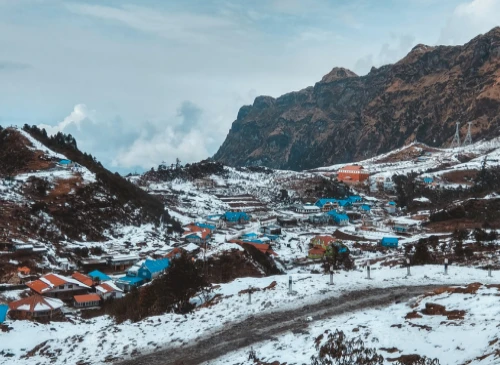
As you ascend north of Ghunsa, the cultural landscape transforms. Here, in the high, arid valleys closer to the Tibetan border, the inhabitants are predominantly Tibetan Buddhists of Sherpa and Tibetan origin. Their culture is visually defined by the presence of mani walls (stone tablets carved with prayers), chortens (stupas), and colorful prayer flags that carry mantras on the wind. The monastery in Ghunsa is a focal point of community life. The economy has historically been based on trans-Himalayan trade, yak and dzopkyo (yak-cow hybrid) herding, and now, sustainable tourism. The people exhibit a remarkable adaptation to high-altitude living, with a diet centered on tsampa (roasted barley flour), butter tea, and hearty stews. Their spiritual life is deeply embedded in daily routine, from the turning of prayer wheels to the recitation of mantras, all reflecting a worldview that sees the mountains not as obstacles but as divine protectors.
A Tapestry of Coexistence and Sacred Geography
While distinct, these ethnic groups are connected through centuries of trade, intermarriage, and shared reverence for the landscape. The unifying cultural force for all is the sacred status of Mount Kanchenjunga. For the Limbu, it is Senjelungma, a central figure in their mythology. For Tibetan Buddhists, it is a guardian deity and a hidden sanctuary. This shared sacred geography fosters a deep-seated ethic of conservation and respect. As a trekker, understanding and honoring local customs is essential: walking clockwise around religious structures, not touching prayer flags, and dressing modestly. The Kanchenjunga Circuit, therefore, offers more than scenic splendor; it is a living museum of cultural endurance, inviting you to walk respectfully through a world where tradition and belief are as enduring as the mountains themselves.
Travel Insurance for Kanchenjunga Circuit Trek
Securing comprehensive travel insurance is not merely a recommendation for the Kanchenjunga Circuit Trek. It is an absolute and non-negotiable requirement for your safety and financial security. Given the trek's extreme remoteness, high altitude (exceeding 5,100 meters), challenging terrain, and lack of advanced medical facilities, standard travel insurance policies are almost always insufficient. You must procure a specialized adventure or mountaineering insurance policy that explicitly covers the specific risks associated with this expedition.
The policy must include, as a minimum, the following mandatory provisions:
- Emergency Helicopter Evacuation: This is the single most critical coverage. In the event of severe altitude sickness (like HAPE or HACE), a serious injury, or other medical emergencies, evacuation by helicopter is the only viable option. Your policy must cover the full cost of this service, which can amount to thousands of dollars, from remote trail locations to a hospital in Kathmandu.
- High-Altitude Trekking Coverage: The policy must explicitly state that it covers trekking up to at least 5,500 meters (with some companies requiring 6,000 meters for a safety margin). Many standard policies void coverage above 3,000 or 4,000 meters. Ensure the fine print includes the Kanchenjunga region by name or covers trekking in Nepal without altitude exclusions.
- Comprehensive Medical Coverage: This should include hospitalization, doctor's visits, medication, and especially treatment for Acute Mountain Sickness (AMS) and related complications. Ensure there is adequate coverage for potential expenses at private hospitals in Kathmandu, which are often the destination after an evacuation.
- Repatriation: Coverage for medical repatriation to your home country if necessary.
- Trip Cancellation, Interruption, and Delay: This protects your financial investment if you must cancel due to illness, a family emergency, or if your trek is delayed due to unforeseen circumstances like flight cancellations to/from Biratnagar or Taplejung.
- Coverage for Gear and Baggage: For loss, theft, or damage to your personal trekking equipment and baggage.
Crucially, you must carry a printed copy of your insurance policy, including the 24-hour emergency assistance contact number, with you at all times during the trek. Your trekking agency will require proof of valid insurance before your departure. Before purchasing, read the policy wording carefully, declare any pre-existing medical conditions, and confirm that the insurer has a proven record of assisting with evacuations in Nepal. Treat this not as an administrative formality, but as the most important piece of gear in your pack a lifeline that ensures you can access life-saving care in one of the most remote corners of the Himalayas.
Personal Expenses & Cash
Managing personal expenses and cash on the Kanchenjunga Circuit Trek requires careful planning due to the journey's profound remoteness. Beyond the initial trek cost covered by your agency, you will need a separate budget for daily incidentals, and a strict cash-only policy is essential, as there are no ATMs, banks, or card facilities anywhere on the trail after leaving Taplejung.
Budgeting for Daily Personal Expenses:
While meals and accommodation in teahouses are typically included in your package, you should budget for additional daily costs. A recommended amount is USD 20-25 per day to cover items such as:
- Bottled water, soft drinks, and snacks (chocolate, biscuits).
- Charging electronic devices (which can cost NPR 300-500 per day at solar/wind-powered charging stations).
- Hot showers (a luxury that may cost NPR 500-800).
- Wi-Fi access (limited and expensive satellite-based connections, costing NPR 500-1000 per card).
- Personal souvenirs, local handicrafts, or beer/alcohol (tongba, local rum).
- Tips for your guide and porter team (a culturally important practice; see separate note below).
Cash Logistics: What to Bring and How to Carry It:
- Currency: Carry all cash in Nepalese Rupees (NPR). While USD may be accepted by your agency in Kathmandu, only NPR is usable in village teahouses. Ensure you obtain this cash in Kathmandu or Biratnagar before the trek begins.
- Amount: For a standard 19-day trek, after accounting for your upfront package, it is prudent to carry NPR 40,000 to 70,000 (approximately USD 300-525) in cash for personal expenses. Include a small emergency reserve within this amount.
- Breakdown: Bring this money in a mix of small and medium denominations (NPR 100, 500, and 1000 notes). Smaller notes are invaluable for buying water, snacks, and tipping, as teahouses often have limited change.
- Security: Use a money belt or hidden pouch worn under your clothing to carry the bulk of your cash. In your daypack, carry only the amount you anticipate needing for that specific day in a separate, accessible wallet. Never leave cash unattended in your room.
A Critical Note on Tipping
Tipping your guide, assistant guide, and porters is a standard and expected practice at the trek's conclusion. It is a direct reflection of your appreciation for their hard work and expertise. While discretionary, a common guideline is to set aside USD 100-150 from your total cash for this purpose. This is typically pooled and distributed among the crew, with the head guide receiving the largest share. Your trekking agency can often provide more specific, current recommendations based on group size. Ensure you have saved enough NPR in larger denominations specifically for this purpose, separate from your daily spending money.
Trail Etiquette and Environment
Observing proper trail etiquette and environmental responsibility on the Kanchenjunga Circuit Trek is a fundamental responsibility that transcends mere politeness. It is an act of respect for the fragile ecosystems, local cultures, and the trek's remote sanctity. As a guest in one of the planet's last great wildernesses, your conduct directly impacts its preservation. Core to this is the "Leave No Trace" ethic, which must be practiced rigorously. This means carrying out all non-biodegradable waste, including used toilet paper and snack wrappers facilities for proper waste disposal do not exist on the trail. Biodegradable waste should be buried well away from water sources. Human waste must be managed thoughtfully; use designated toilet tents where provided or dig a cathole at least 6-8 inches deep and 200 feet from any stream or trail.
Cultural etiquette is equally vital. Always walk clockwise around mani walls, chortens, and prayer wheels, a practice aligned with local Buddhist traditions. Seek explicit verbal permission before photographing or filming local people, their homes, or religious ceremonies is a gesture of respect that is deeply appreciated. Dress modestly, especially in villages and near religious sites. When interacting, a smile and a polite "Namaste" go a long way. On the trail itself, practice good hiking courtesy: yield the right of way to yak and mule trains by moving to the uphill side of the path. These heavily-laden animals have the right of way. Maintain a respectful silence in sacred spaces and allow quieter, more contemplative trekkers to enjoy the natural soundscape. By minimizing your environmental footprint and honoring local customs, you help ensure that the Kanchenjunga region remains pristine and culturally vibrant for future generations of trekkers.
Best season/weather for Kanchenjunga Circuit Trek
The ideal season for the Kanchenjunga Circuit Trek is dictated by a balance of stable weather, clear visibility, and safe trail conditions. Due to its high altitude and eastern Himalayan location, the weather windows are narrow and well-defined. The absolute best times to undertake this challenging trek are during two primary seasons: Spring (March to May) and Autumn (September to November). These periods offer the most reliable combination of clear skies, moderate temperatures, and stable trails, maximizing your chances of safe passage over high passes and unforgettable mountain views. Outside these windows, the trek becomes significantly more difficult and risky due to monsoon rains, winter snow, and extreme cold.
Kanchenjunga Circuit Trek during Spring (March-May):
The spring season is arguably the most visually spectacular time to trek the Kanchenjunga Circuit, as the landscape erupts in color. This period marks the end of the cold winter, with gradually warming temperatures and longer daylight hours.
- Weather and Conditions: Days are generally sunny and clear, with temperatures ranging from pleasantly warm in the lower valleys (10-20°C / 50-68°F) to cold but manageable at higher altitudes (daytime 0-10°C / 32-50°F; nights can drop below freezing). Afternoon cloud build-up is common, but precipitation is usually light and sporadic. The high passes are typically clear of deep winter snow by late April, though residual snowpack may remain.
- Advantages: The premier advantage is the incredible rhododendron bloom. The forests, especially between 2,500m and 4,000m, become a breathtaking tapestry of red, pink, and white flowers. This is also an excellent time for birdwatching, as migratory species return and the forest is alive with activity. Visibility for mountain panoramas is consistently very good.
- Challenges: Trails can be muddy in the lower, shaded sections as the winter snow melts. As spring progresses toward May, the likelihood of pre-monsoon haze and brief afternoon showers increases. It is a popular season, so while still less crowded than Everest, teahouses can be busier than in autumn.
Kanchenjunga Circuit Trek during Summer/Monsoon (June-August):
Trekking the Kanchenjunga Circuit during the summer monsoon is generally not recommended and is considered the most difficult and risky season due to persistent heavy rainfall.
- Weather and Conditions: This period is characterized by daily, often heavy rainfall, high humidity, and pervasive cloud cover. Landslides are a frequent and serious hazard, potentially blocking or washing out trails, particularly in the lower, steeper sections and river valleys. Cloud cover consistently obscures the mountain views that are the trek's main highlight.
- Advantages: The region is at its most lush and vividly green. Flora is abundant, and waterfalls are powerful. This is the least crowded season, offering total solitude for experienced trekkers who are prepared for the challenges.
- Challenges: The primary challenges are severe and constant: slippery, dangerous trails; leeches in the forests; high river crossings that can become impassable; a very high risk of flight cancellations to/from Biratnagar; and almost guaranteed obscured mountain views. The risk of altitude-related illness can be compounded by the difficulty of the conditions.
Kanchenjunga Circuit Trek during Autumn (September-November):
Autumn is widely regarded as the optimal and most popular season for the Kanchenjunga Circuit, offering the highest probability of excellent weather and crystal-clear skies.
- Weather and Conditions: Following the monsoon, the air is washed clean, resulting in unparalleled visibility. The weather is remarkably stable, with dry trails, abundant sunshine, and minimal rainfall. Daytime temperatures are similar to spring but with colder, crisper nights, especially from late October onward. This is the driest season, making river crossings safer and high passes most accessible.
- Advantages:Superlative mountain views are the hallmark of autumn. The peaks, including Kanchenjunga, appear razor-sharp against deep blue skies. Stable weather conditions make for safer and more predictable trekking, especially for crossing high passes like Sele La. Harvest season in the villages provides a vibrant cultural backdrop.
- Challenges: Cold temperatures, particularly at night from November onwards, require a high-quality sleeping bag. This is the peak trekking season in Nepal, so while Kanchenjunga remains remote, you will encounter more fellow trekkers than in other seasons, and advance booking is essential.
Kanchenjunga Circuit Trek during Winter (December-February):
Winter transforms the circuit into a serious expedition for only the most experienced, well-equipped, and cold-tolerant trekkers. It is a season of extreme conditions and stark beauty.
- Weather and Conditions: This season brings intense cold, especially at night, with temperatures at high camps (Lhonak, Ramche) plummeting to -15°C to -25°C (5°F to -13°F) or lower. Days can be sunny and clear, but short. Heavy snow is likely, particularly in January and February, which can block high passes, obscure trails, and increase the risk of avalanches on certain slopes.
- Advantages: The experience offers absolute solitude and pristine, snow-blanketed landscapes. The air is phenomenally clear, and if the high passes are navigable, the views are breathtaking. It is a unique challenge for seasoned adventurers.
- Challenges: The cold is the paramount challenge, requiring expedition-level gear. Many teahouses above Ghunsa and Tseram close entirely, meaning you must be fully self-sufficient with a camping crew, food, and fuel. Trail finding becomes difficult with snow cover, and the risk of frostbite, hypothermia, and altitude illness is significantly heightened. This season should only be attempted by experts with a professional support team.
Packing List for Kanchenjunga Circuit Trek
Packing for the Kanchenjunga Circuit Trek is a critical exercise in balancing necessity with weight, and comfort with safety. Given the trek's duration, dramatic climate shifts (from subtropical heat to sub-zero alpine cold), and total remoteness, every item must be purposeful and reliable. The key principle is layering for clothing and prioritizing durability for gear. This list is comprehensive and assumes you will be staying in teahouses; if trekking in winter, you must add expedition-level cold-weather camping gear. Pack everything in waterproof stuff sacks or compactor bags inside your main luggage.
Travel Documents:
This is the most crucial category. Losing these items can halt your trek. Store all originals in a waterproof, zip-lock document wallet and carry physical copies separately.
- Passport: Valid for at least 6 months beyond your entry date, with multiple blank visa pages.
- Nepalese Visa: Obtainable on arrival at Kathmandu's Tribhuvan International Airport or in advance from an embassy.
- Trekking Permits: The Kanchenjunga Restricted Area Permit (RAP) and Kanchenjunga Conservation Area Permit (KCAP). Your agency will provide these. Carry multiple photocopies.
- Travel Insurance Documents:Printed copies of your policy document and the 24-hour emergency assistance contact number. The policy must explicitly cover high-altitude trekking up to 5,500m and helicopter evacuation.
- Passport-Sized Photos: At least 4-6 extras for permits or unforeseen administrative needs.
- Vaccination Certificates & Details: A record of your routine and recommended vaccinations (COVID-19, Typhoid, etc.).
- Emergency Contact Information: For family, your embassy in Kathmandu, and your trekking agency.
- Cash: All necessary Nepalese Rupees in mixed denominations (see "Personal Expenses & Cash" section).
Backpacks and Bags:
A well-organized bag system is essential for managing gear across different climates and daily needs.
- Main Duffel Bag (60-80 Liters): This will be carried by your porter. It must be durable, waterproof or highly water-resistant, and lockable. Use a branded duffel from a reputable outdoor company. Do not use a suitcase.
- Daypack (25-35 Liters): You will carry this daily. It should be comfortable, have a good hip belt to transfer weight, and contain pockets for easy access to water, snacks, layers, and camera gear.
- Waterproof Covers/Linears: A rain cover for your daypack and heavy-duty plastic compactor bags or a dry bag liner for the inside of your duffel. This is your primary defense against monsoon rains or accidental spills.
- Small Organizational Bags: Several zip-lock bags and stuff sacks (small, lightweight bags for compression) to organize clothing, electronics, and toiletries.
Clothing (Layering System):
The mantra is "layer to adjust." Avoid cotton, as it retains moisture and loses insulating properties when wet. Use synthetic or merino wool fabrics.
- Base Layers (Moisture-Wicking):
- Top & Bottom: 2-3 sets of lightweight, long-sleeved tops and full-length bottoms (merino wool or synthetic).
- Mid Layers (Insulation):
- Fleece Jacket or Pullover: One mid-weight piece.
- Insulated Down or Synthetic Jacket: A crucial piece for high altitudes and evenings. It should pack down small.
- Outer Layers (Weather Protection):
- Waterproof & Windproof Jacket (Gore-Tex or equivalent): Non-negotiable. Must have a good hood.
- Waterproof & Windproof Pants: Essential for rain, snow, and wind on high passes.
- Trekking Pants: 2-3 pairs of lightweight, quick-dry, convertible zip-off pants are highly versatile.
- Trekking Shirts: 2-3 long-sleeved shirts for sun and bug protection; 1-2 short-sleeved shirts for lower altitudes.
- Headwear:
- Wide-Brimmed Sun Hat or Cap
- Warm Beanie (fleece or wool)
- Balaclava or Neck Gaiter (for high-altitude wind/cold)
- Handwear:
- Lightweight Gloves (liner gloves)
- Insulated, Waterproof Gloves or Mittens (for high camps/passes)
- Underwear & Socks:
- Underwear: Synthetic or merino wool (4-5 pairs).
- Socks: 4-5 pairs of good quality, moisture-wicking trekking socks (wool blend). 1-2 pairs of warm thermal socks for sleeping/high altitudes.
Footwear:
Your most critical gear investment. Blisters or inadequate boots can end your trek.
- Trekking Boots:Sturdy, waterproof, broken-in hiking boots with ankle support. They must be comfortable for long days on rocky, uneven terrain. Do not bring brand-new boots.
- Camp Shoes: Lightweight shoes or sandals (e.g., Crocs, running shoes) to wear in teahouses after hiking, giving your feet and boots a chance to dry and rest.
- Gaiters: Highly recommended, especially in spring (mud) or winter (snow). They keep debris, snow, and water out of your boots.
Accessories and Other Gear:
This category covers your comfort, health, and ability to document the journey.
- Trekking Poles:Highly recommended. Collapsible poles reduce strain on knees during long descents and improve stability on rough trails.
- Sleeping Bag: Rated to at least -10°C / 14°F (and colder for late autumn/winter treks). A sleeping bag liner adds warmth and keeps your bag clean.
- Headlamp: With extra batteries. Essential for early morning starts, late evenings, and bathroom trips.
- Sunglasses:100% UV protection with side shields. Category 3 or 4 is essential for glacier travel and high-altitude sun.
- Water Purification:Reusable water bottles (2 x 1-liter) or a hydration bladder (2-3 liter). A reliable purification method is mandatory: iodine tablets, a Steripen, or a gravity filter (e.g., Katadyn BeFree, Sawyer Squeeze).
- Personal First-Aid Kit: Include blister care (Compeed), antiseptic wipes, bandages, ibuprofen, anti-diarrheal pills, and any personal prescription medications (including Diamox for altitude, after consulting a doctor).
- Toiletries & Personal Items: Biodegradable soap, toothpaste/toothbrush, quick-dry towel, sunscreen (SPF 50+), lip balm with SPF, wet wipes, hand sanitizer.
- Electronics: Camera, extra memory cards, power bank/battery pack (20,000mAh+), universal plug adapter. Note: Charging costs money on the trail.
- Optional but Useful: A good book, journal, pen, lightweight repair kit (duct tape, needle/thread), a handful of energy bars or favorite snacks from home.