Annapurna trekking lies in the protected ACAP area gives a breathtaking expanse of natural splendor nestled in Nepal’s Himalayan embrace. Spanning a colossal 7,629 square kilometers, the Annapurna Conservation Area Project (ACAP) safeguards this majestic realm, where the grandeur of Mount Annapurna at an awe-inspiring altitude of 8,091 meters reigns supreme, alongside the majestic Annapurna massif.
Traverse the extensive network of trails that crisscross this wondrous land, interweaving the mesmerizing landscape like nature’s own tapestry. Experience an array of trekking routes, each offering a distinct flavor and allure, as the Annapurna region reveals its secrets.
Enveloped in breathtaking panoramas and diverse geography, this Himalayan haven invites intrepid adventurers to immerse themselves in an ethereal wonderland. From rugged peaks to lush valleys, cascading waterfalls to serene lakes, the Annapurna trekking epitomizes nature’s splendor at every turn.
Major attractions of the Annapurna Region
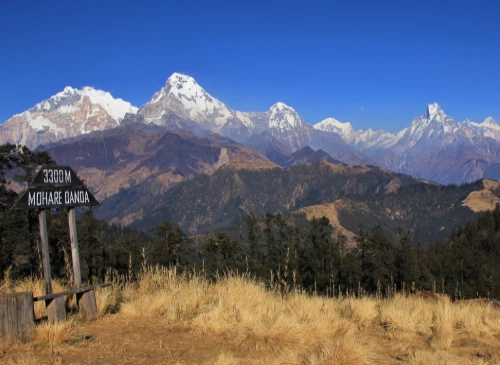
- Poon Hill: The legendary viewpoint for perhaps the most famous sunrise in trekking. A pre-dawn hike rewards you with a 180-degree panorama of the Annapurna and Dhaulagiri ranges painted in golden light.
- Annapurna Base Camp (ABC): The dramatic amphitheater at 4,130m, surrounded by a fortress of towering peaks—Annapurna I, Annapurna South, Machhapuchhre (Fishtail), and Hiunchuli. The sense of immersion is unparalleled.
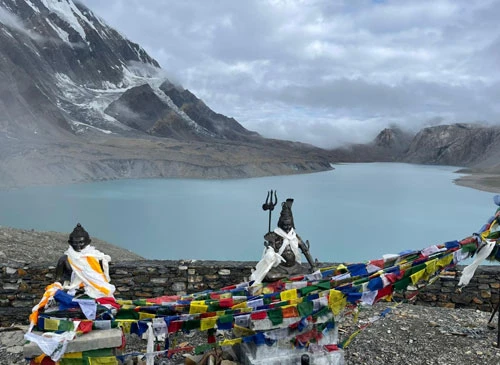
- Tilicho Lake: At 4,919 meters, it's one of the world's highest lakes. Its stunning turquoise waters set against a barren, rocky landscape feel otherworldly.
- Thorong La Pass (5,416m): The thrilling climax of the Annapurna Circuit. Crossing this high mountain pass is a challenging but iconic achievement.
- Muktinath Temple: A sacred site for both Hindus and Buddhists at 3,800m, offering a profound spiritual experience amidst the arid landscapes of Upper Mustang.
- Natural Hot Springs at Tatopani/Jhinu Danda: The perfect remedy for weary muscles after days of trekking.
The Himalayas of the Annapurna Region
This is a realm of giants. The skyline is dominated by:
- Annapurna I (8,091m): The 10th highest mountain in the world and a formidable challenge for climbers.
- Machhapuchhre (6,993m): The sacred "Fishtail" mountain, whose stunning profile is the region's poster child. It is closed to summiting out of respect.
- Dhaulagiri I (8,167m): The 7th highest mountain, its massive ice walls dominate the western skyline across the Kali Gandaki Gorge—the world's deepest gorge.
- Annapurna South (7,219m), Hiunchuli (6,441m), and Gangapurna (7,455m): Forming the majestic cirque around ABC.
The beauty here is in the accessibility. You walk amongst these peaks, not just view them from afar.
People and Culture of the Annapurna Region
The trails are threads connecting vibrant cultural tapestries. The region is a mosaic of ethnic groups:
- Gurungs & Magars: Predominant in the lower hills. Known for their warmth, distinct languages, and famous as Gurkha soldiers. Visit their traditional stone villages like Ghandruk and Landruk.
- Thakalis: From the Thak Khola area (Mustang), they are renowned entrepreneurs, often running the teahouses along the circuit. Their cuisine, like Thakali Khana (a delicious dal-bhat set), is a trekker's fuel.
- Manangis & Lhopas (Mustang): In the high, dry regions north of the Himalaya. Their Tibetan-influenced culture, ancient monasteries (like Braga), and striking landscapes are mesmerizing.
- Tibetan Buddhists: Their influence is strong in Upper Mustang and higher villages. Colorful prayer flags, mani walls, and chortens (stupas) line the paths, and the rhythmic chant of monks fills ancient gompas.
Respect is key. A smile and a polite "Namaste" go a long way. Always walk clockwise around mani walls and stupas.
How to get to the Annapurna Region?
Your journey begins in Pokhara, Nepal's lakeside adventure capital.
- To Pokhara: Fly (25 min from Kathmandu) or take a tourist bus (6-7 hrs) from Kathmandu.
- To the Trailheads: From Pokhara, local transport takes you to the starting points:
- Nayapul or Phedi: For treks to ABC, Poon Hill, and the shorter routes.
- Besisahar or Chame: The classic starting points for the Annapurna Circuit.
- Jomsom: You can fly directly to Jomsom from Pokhara to start the Upper Mustang trek or explore the lower Mustang area.
Permits: You need two permits: the ACAP Permit and the TIMS Card (Trekkers' Information Management System). These are easily obtained in Kathmandu or Pokhara with passport copies and photos.
Trekking Routes of Annapurna
There's a trail for every ambition and fitness level.
- Annapurna Circuit (12-21 days): The classic. It circles the entire Annapurna massif, offering an incredible cross-section of climates and cultures, culminating in the Thorong La pass. Road development has changed parts, but its essence remains.
- Annapurna Base Camp Trek (7-12 days): A more direct journey into the heart of the mountains. Traverse through Modi Khola gorge, rhododendron forests, and glacial moraines to stand at the foot of the giants.
- Ghorepani Poon Hill Trek (4-5 days): The perfect introduction. Short, scenic, and with that legendary Poon Hill sunrise. Ideal for families or those with limited time.
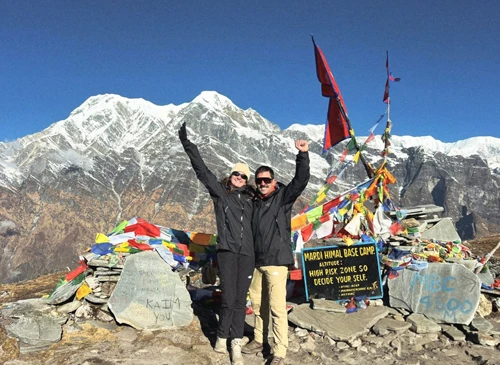
- Mardi Himal Trek (5-7 days): A quieter, stunning alternative. This ridge-walk offers close-up views of Machhapuchhre and leads to the lesser-visited Mardi Himal Base Camp.
- Upper Mustang Trek (10-14 days): A journey into a semi-independent, ancient Tibetan kingdom. It's a restricted area (requires a special permit) with a stark, desert-like landscape and a preserved medieval culture.
Best Time to Visit: Spring (March-May) for rhododendron blooms, and Autumn (October-November) for clear skies and stable weather.