Quick Facts About Mount Everest’s Location
For those planning a journey or simply curious about the "Top of the World," these essential facts provide a snapshot of Everest’s geographic profile.
Fact | Detail |
Official Elevation | 29,031.7 feet (8,848.86 meters) |
Geographic Coordinates | 27°59′ N 86°56′ E (or 27.9881° N, 86.9250° E) |
Mountain Range | Mahalangur Range, Great Himalayas |
International Border | Shared between Nepal and China (Tibet Autonomous Region) |
Local Name (Nepal) | Sagarmatha ("Forehead of the Sky") |
Local Name (Tibet) | Chomolungma ("Goddess Mother of the World") |
Protected Area (Nepal) | Sagarmatha National Park (UNESCO World Heritage Site) |
Primary Base Camps | South Base Camp (Nepal) and North Base Camp (Tibet) |
Nearest Gateway (Nepal) | Lukla (Town) and Kathmandu (Capital) |
Nearest Gateway (Tibet) | Tingri (Town) and Lhasa (Capital) |
Geologic Activity | Moves northeast and rises a fraction of an inch annually |
Which Country Owns Mount Everest? A Diplomatic Giant
The question of ownership isn't as simple as drawing a line. Instead of being "owned" by one nation, Mount Everest is a sovereign giant shared between two. The international border between Nepal and China (Tibet Autonomous Region) runs directly across its summit.
Duration: 17 Days
Price from
Think of it as a natural monument with two proud custodians. The southern slope belongs to Nepal, where it's known as Sagarmatha. The northern slope belongs to China, where it's called Chomolungma. Climbers can choose to approach from either side, each offering a distinct cultural and physical journey. There is no single deed to the peak; instead, its stewardship is defined by a treaty, cooperation, and the profound respect both nations hold for this sacred mountain.
So, Where Exactly Is Mount Everest on the Map?
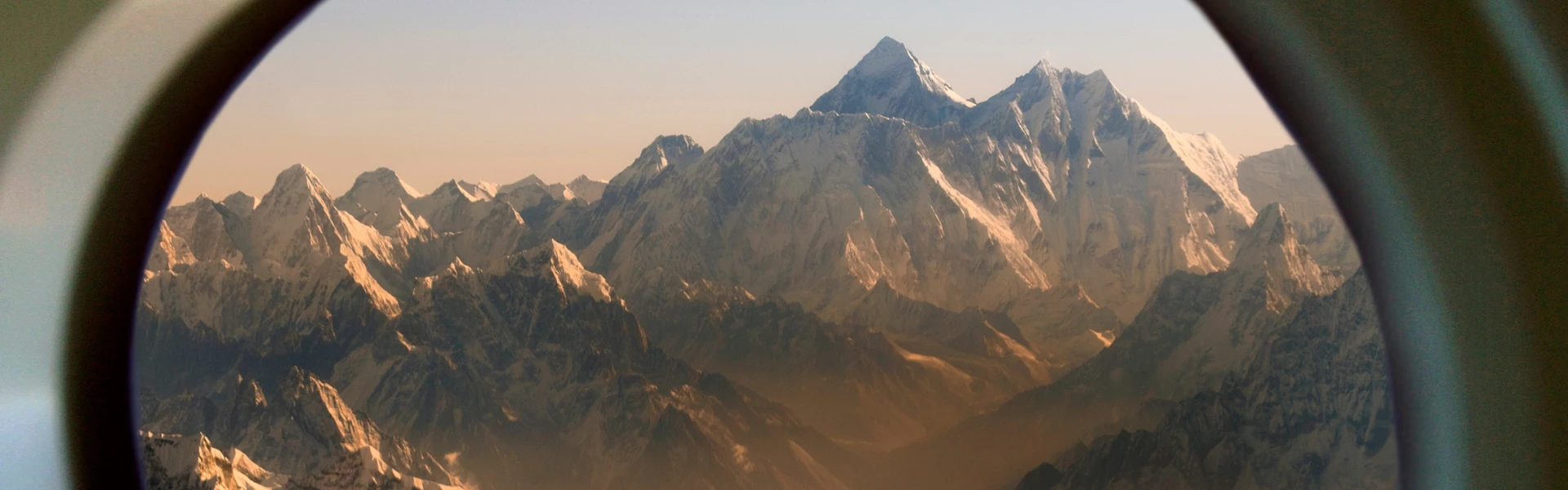
Close your eyes and picture the grand, sweeping curve of Asia. Find the immense, crumpled landscape of the Himalayas, the planet's most formidable mountain range. Nestled within this rocky fortress, on the crest of the Mahalangur Himal sub-range, sits Everest.
To give you coordinates you can feel in your bones: it lies at 27°59′17″N, 86°55′31″E. But more tangibly, it stands as the crowning jewel between the Khumbu region of Nepal to the south and the Tingri County of Tibet to the north. It is not an isolated spire but the monarch of a court of giants, surrounded by other legendary peaks like Lhotse and Nuptse. Its location is remote, majestic, and utterly commanding.
A Peak with Different Names: History and Naming More Than Just "Everest"
The mountain has a passport with multiple aliases, each telling a story of the people who live in its shadow.
Where Did the Name "Everest" Come From?
The name we most commonly use is surprisingly young and born from cartography. In 1865, the British Royal Geographical Society officially named it Mount Everest after Sir George Everest, the British Surveyor General of India from 1830 to 1843. Ironically, Sir George never saw the peak, and he himself argued that local names should be used. But the colonial name stuck on Western maps, cementing its place in global consciousness.
The Local Names: Sagarmatha (Nepal) and Chomolungma (Tibet)
These are the soulful names, born from the land and its people.
- Sagarmatha (सगरमाथा): A Nepali name meaning "Forehead of the Sky" or "Goddess of the Sky." It evokes the mountain's majestic, heavenly presence touching the firmament.
- Chomolungma (ཇོ་མོ་གླང་མ): A Tibetan name, often spelled Qomolangma, meaning "Goddess Mother of the World." This name reflects the deep spiritual reverence for the mountain as a life-giving and protective maternal force.
To truly know Everest is to know all three names. "Everest" is its global identity, but Sagarmatha and Chomolungma are its heart and spirit.
How to Get There?
Getting to Everest is an adventure in itself, and your path depends entirely on which "face" you choose to visit.
To the Nepal Side (Everest Base Camp Trek):
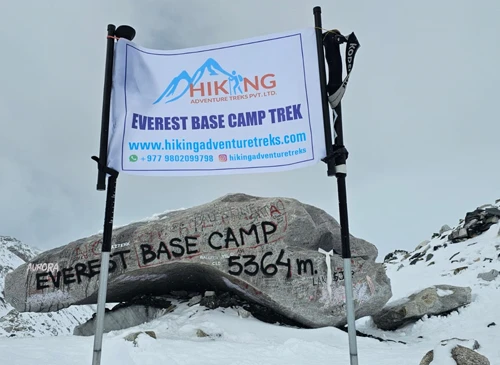
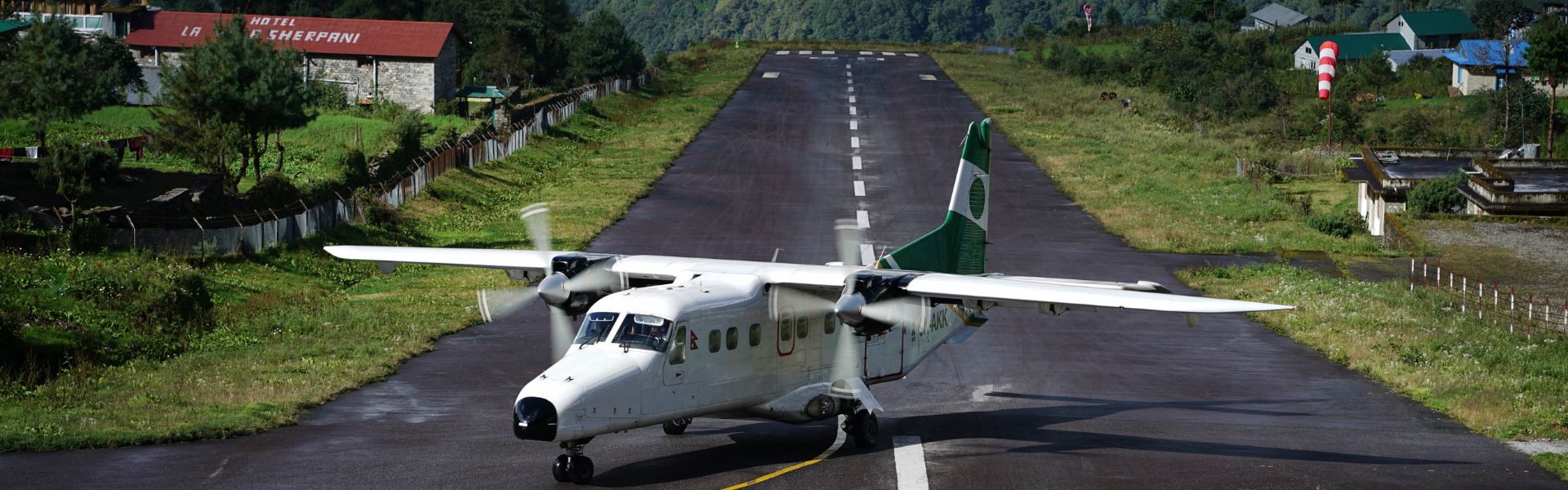
Your pilgrimage begins with a flight into Kathmandu, a city of ancient temples and buzzing energy. From there, we will take a short and thrilling flight to Lukla. This is the home to one of the world's most dramatic airstrips which lands you in the Khumbu. Then, your feet take over. The world-famous Everest Base Camp Trek is a 12-14 day odyssey on foot, passing through Namche Bazaar, Tengboche Monastery, and finally to the bustling, tented city at the foot of the Khumbu Icefall. It's a life-changing trek through the world's most famous mountain landscape.
To the Tibet Side (North Base Camp):
Your gateway is typically a flight into Lhasa, the spiritual capital of Tibet, to acclimatize. From there, you start on an incredible overland journey by 4x4 along the Friendship Highway. You will drive past turquoise lakes, over high mountain passes, and through vast, open plains. You can drive very close to North Base Camp (or take a shuttle bus for the final stretch), where the view of the mountain's north face is stark, unobstructed, and profoundly powerful.
Climbing the Ultimate Peak: A Brief Overview
To climb Mount Everest is to enter into a slow, high-stakes dance with the planet’s greatest physical force. It’s a profound test that blends ancient fortitude with modern logistics. For about two months, climbers live in a vertical world of ice and rock, their fate governed by the thinnest of air in the "Death Zone." While guided expeditions provide a framework of fixed ropes, weather forecasts, and the irreplaceable wisdom of Sherpa guides, the mountain holds the final cards. Every step is a negotiation with deep cold, sheer exhaustion, and the fleeting, perfect calm of a summit day. It is less a sport and more a pilgrimage of endurance, where success is never guaranteed.
The question of who first stood on the roof of the world was finally answered on a cold morning in late May 1953. At 11:30 a.m. on May 29th, a New Zealand beekeeper named Sir Edmund Hillary and a Nepalese Sherpa named Tenzing Norgay reached the summit together. Their victory was a shared one, the culmination of a massive British expedition and a lifetime of skill. While the mystery of George Mallory and Andrew Irvine’s 1924 attempt still tugs at our imagination. It is Hillary and Tenzing’s partnership that opened the door to the sky, proving the summit could be reached.
Everest is a canvas for extraordinary human stories, each record a testament to a different kind of strength. It’s where we see Kami Rita Sherpa, a man who has summited an almost unimaginable 29 times, his life woven into the mountain's rhythm. It’s where Jordan Romero, at 13, stood atop the world with his father. Miura Yūichirō, at 80, also proved that some dreams have no expiration date. The mountain has been humbled by firsts: Tabei Junko in 1975, showing the way for women climbers everywhere, and Reinhold Messner and Peter Habeler in 1978, who climbed into the Death Zone on nothing but their own breath, shattering a fundamental fear. Each record, from the fastest ascent to the longest stay, writes a new chapter in our ongoing conversation with the impossible.
Forget sprinting; climbing Everest is a marathon measured in weeks, not days. The entire journey from landing in Kathmandu to returning typically takes two full months. But only a handful of those days are spent actually pushing upward. The majority of the time is an exercise in disciplined waiting, a process called acclimatization. Climbers play a dangerous game of "climb high, sleep low," repeatedly hiking up to Camps 1 to 3 to stress their bodies, then retreating to Base Camp to recover and grow stronger. The final, breathless dash for the summit is just the last act of a very long play. It is a reminder that on Everest, patience isn’t just a virtue; it’s the key to survival.
The Realities and Risks: Cost and Danger
Dreaming of standing on top of the world is one thing. Turning that dream into reality means facing a stark equation of staggering cost and sobering danger. Everest isn't just a mountain; it's a high-stakes venture where preparation and privilege meet the raw, unforgiving power of nature. While stories of triumph inspire us, the journey is underpinned by a complex web of logistics, regulations, and life-or-death calculations. To look toward the summit is to also acknowledge the "Death Zone," not just as a physical place, but as the ultimate representation of the risk every climber accepts. This section isn't meant to shatter dreams but to ground them in the essential truths of what it truly takes to answer the mountain's call.
How Much Does It Cost to Climb Mount Everest?
Climbing Everest is arguably the most expensive personal challenge on the planet. For a standard guided expedition with a reputable Western company, you need to budget between $60,000 and $85,000. This gets you the full package: experienced guides, Sherpa support, meals, base camp infrastructure, and logistics.
But the range is wide. An elite, highly personalized expedition with top-tier guides can soar well over $100,000. On the other end, a more basic, "budget" climb from a local Nepali operator might start around $40,000-$55,000, but often involves larger teams and fewer luxuries.
For context, the trek to Everest Base Camp (EBC) is a life-changing journey to the foot of the mountain that offers the essence of the Himalayan experience for a fraction of the cost. It will typically be $1,200 to $2,000 for a 12-14 day guided trek. It’s a powerful reminder that you can touch the magic of Everest without committing to the summit's extreme price.
Why Is Climbing Everest So Expensive?
The price tag isn't about glamour; it's a breakdown of what it physically takes to support human life in a place that doesn't want you there. Here’s where your money actually goes:
- The Permission Slip: Simply put, it costs a fortune just for the right to try. The Nepalese climbing permit alone is $11,000 per person (and set to rise). This is the single largest fixed cost.
- The Life Support System: You are funding a small village dedicated to your climb. This includes:
- Sherpa Support: Your fees pay the salaries and life insurance for the climbing Sherpas who fix ropes, carry loads, and guide you. Their expertise is priceless.
- The Oxygen You Breathe: Bottled oxygen systems and refills are a massive expense, critical for survival in the Death Zone.
- Logistical Army: Cooks, porters, and Base Camp managers who keep you fed and functional.
- The "Ice Doctors": A special team of Sherpas who risk their lives each season to build the ladder-and-rope route through the deadly, shifting Khumbu Icefall.
- The Gear to Survive: High-altitude-specific gear—boots, suits, and gloves is astronomically expensive and non-negotiable.
- The Safety Net: Satellite weather forecasts, communication systems, and mandatory emergency evacuation insurance are built into the cost.
In short, you are not paying for a vacation. You are funding a complex, life-supporting expedition where every dollar is tied to an element of safety, logistics, or survival.
Can You Hike Everest for Free? The Short, Hard Truth
The romantic idea of a solo, self-funded adventure to the top? It's a complete and dangerous impossibility.
Everest is a heavily regulated border zone. Climbing without a permit is illegal, and authorities actively patrol base camps. Attempting it would result in arrest, massive fines, and a lifetime ban.
Even the trek to Base Camp requires paid permits (the Sagarmatha National Park entry and local Khumbu permit). The region's remoteness means you must pay for flights to Lukla, food, and lodging in teahouses. There is no way to bypass these systems.
The concept of "free" is antithetical to the reality of Everest. The financial investment is the first and most fundamental filter. It ensures climbers are, at the very least, contributing to the safety systems, local economy, and regulatory framework. It's the non-negotiable entry fee to the most exclusive and dangerous arena on Earth.
Final Thoughts
Mount Everest stands as far more than a mere destination on a map. It is a monumental bridge between cultures and nations, serving as a shared natural treasure between Nepal and the Tibet Autonomous Region of China. This unique geopolitical arrangement was underscored in December 2020 when both nations set aside decades of varying measurements to jointly declare the mountain’s official elevation as 29,031.7 feet (8,848.86 meters). The southern slopes in Nepal’s Solukhumbu District invite adventurers into the vibrant heart of Sherpa culture and the UNESCO-protected Sagarmatha National Park. The northern side in Tibet’s Tingri County offers a more rugged, road-accessible perspective of the massif.
Whether you revere the peak as Sagarmatha, the "Peak of Heaven," or Chomolungma, the "Goddess Mother of the World," the mountain remains a sacred entity to the local communities who have lived in harmony with its slopes for generations. Beyond the thrill of the climb, the shared stewardship of the mountain involves a complex collaboration between two governments. They will manage environmental protection, handle the waste left by expeditions, and ensure the safety of thousands of visitors. Ultimately, Mount Everest is a wild and remote wonder that transcends political borders, standing as a global symbol of human endurance, peace, and the awe-inspiring power of the natural world. As you plan your own journey to the "Roof of the World," remember that you are stepping into a landscape where nature’s majesty unites two distinct worlds into one singular, breathtaking experience.
Ready to start your own Himalayan adventure? Our travel experts are available 24/7 to help you customize the perfect itinerary, whether you're seeking a challenging trek. Reach out to us today to begin planning your journey to the roof of the world:
WhatsApp / Phone: +9779802099198
Email: [email protected]
FAQs
Where exactly is Mount Everest located?
Mount Everest is situated in the Himalayas on the international border between Nepal and Tibet. The summit itself serves as the precise dividing line between the two nations. On the southern side, the mountain is located in the Solukhumbu District of Nepal within Sagarmatha National Park. On the northern side, it is located in Tingri County in the Xigaze area of Tibet
How high is Mount Everest?
It’s 29,032 feet (8,849 meters) tall. That’s so high that commercial jets fly at about that altitude. And believe it or not, it’s still growing a tiny bit every year.
Who was the first person to climb Mount Everest?
Two men made history together: Edmund Hillary from New Zealand and Tenzing Norgay, a local Sherpa from Nepal. They stood on top for the first time on May 29, 1953.
What are the local names for Mount Everest?
"Everest" is the common name, but its true local names are beautiful:
- In Nepal: Sagarmatha ("Forehead of the Sky")
- In Tibet: Chomolungma ("Goddess Mother of the World")
How did Mount Everest get its Western name?
It was named by British mapmakers after Sir George Everest, a former surveyor of India. He actually didn’t want the mountain named after him!
How much does it cost to climb Mount Everest?
A lot. A standard trip costs between $45,000 and $75,000. This covers the permit, expert guides, oxygen, food, and all the necessary safety logistics for a two-month expedition. It’s the price of a luxury car for the world’s toughest challenge.
How long does it take to climb to the summit?.
The whole trip takes about two months. You don’t climb straight up! Most of that time is spent slowly getting your body used to the thin air. The final push to the top from base camp takes about 4-5 days.
What is the "Death Zone"?
Above 26,000 feet, there’s so little oxygen that your body starts shutting down. You can only survive there for a short time, even with oxygen tanks. It’s where most accidents happen, especially on the way down when climbers are exhausted.
Can I visit Mount Everest without climbing it?
Yes! Thousands of people every year do the Everest Base Camp Trek in Nepal. It’s a 12-14 day hike to the foot of the mountain—no climbing gear needed, just good boots and a sense of adventure. You can also visit the Tibetan side by vehicle.
Which side of the mountain is better for travelers?
The South Side is generally considered better for most climbers, offering a higher success rate, better rescue infrastructure, and more established, faster-paced logistics.